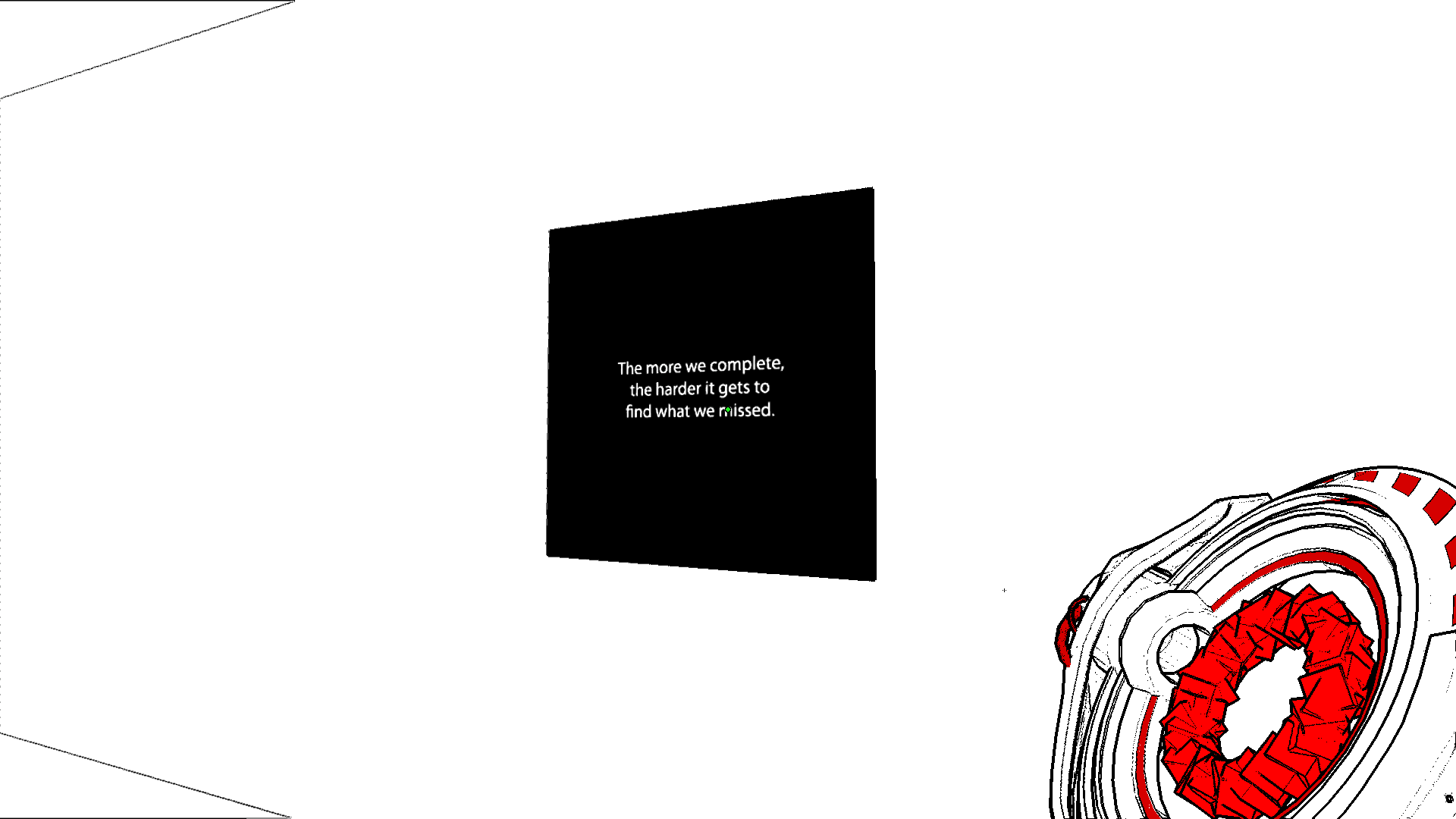
Antichamber Still Holds Up
When Antichamber released back in 2013 it was, in the creator’s own words, an overnight success seven years in the making. The game was phenomenal, and thanks to a great deal of effort in marketing and networking it became an instant icon in the indie gaming scene and the kind of commercial success which allows an indie developer to decide to never do all that again. As a long-time Minecraft player since well before I was purchasing games myself, I personally remember a great deal of effort being put into in-game recreations of some of the earliest and most iconic puzzles that whole year after release. But when I tried playing Antichamber myself, at a much younger age, I wasn’t able to do the creative thinking necessary to progress very far through the game.
Recently, completely on a whim, I sat down with Antichamber again and played it through to the end across about two weeks and a handful of sittings. I can say pretty confidently that even a full 13 years later it’s still a game that’s very worth playing, and it’s certainly my favorite puzzle game out of the three I’ve played this year (the others being Viewfinder, which has some fantastic puzzles and a story that utterly ruins the entire game, and Manifold Garden, which I enjoyed until I tried to work out the secret ending). I’ll note that while I’m aware that games don’t actually “get worse” as time goes on, and there’s nothing wrong with older games in the slightest, what I mean when I say that is that nothing in the gaming space has made Antichamber any less exciting in retrospect than it was on release. I would go so far as to say that Antichamber may still be one of the best first-person puzzlers ever made, and it’s definitely among the top ranks by any metric.
I know that’s a strong statement, but I do believe it. Even setting aside the number of tricks Antichamber pioneered that may be considered relatively commonplace now, many of which simply take advantage of portals and seamless teleportation, there still aren’t any other games quite like it. Antichamber is almost entirely open-world, with the only barriers to where you can go being the tricks you know, the design language you’ve intuited, and the abilities you’ve unlocked. In this sense it could be considered both a “Metroidvania” and a “Metroidbrania” at the same time, in a way. The majority of the puzzles are incredibly obvious in hindsight, and the exceptions to that rule are the ones that are obvious in foresight. Antichamber takes the former and fills the map with invisible tutorials for its own hidden mechanics (or explicit tutorials for its upgrades), and then uses them to circle you back to places you’ve already been but simply didn’t know how to approach before. In my short post-finale march back through the game to finish the map and see everything it had to offer, I kept coming across puzzles that, with a little more searching and the knowledge that I had missed a path in them, could have opened themselves to me much earlier if I had happened to approach them in a different way.
I can’t say too much about the game without beginning to spoil it, but the end result of Antichamber’s semi-linear puzzle design, its constant play with perspective and impossible non-euclidian space, and the very consistent and intuitive visual language that you’ll slowly pick up on as you play is that, if you’re like me, you’ll go into the game a little confused and not fully understanding what it’s asking of you, and you’ll slowly begin to learn exactly what it’s asking of you and anticipate some of its tricks before it pulls them. And, if you’re like me, you’ll come away from Antichamber with a feeling of wonder and discovery. And, of course, you will learn a lot of ways to manipulate and use cubes. It’s the kind of game that you keep thinking about long after it’s over.
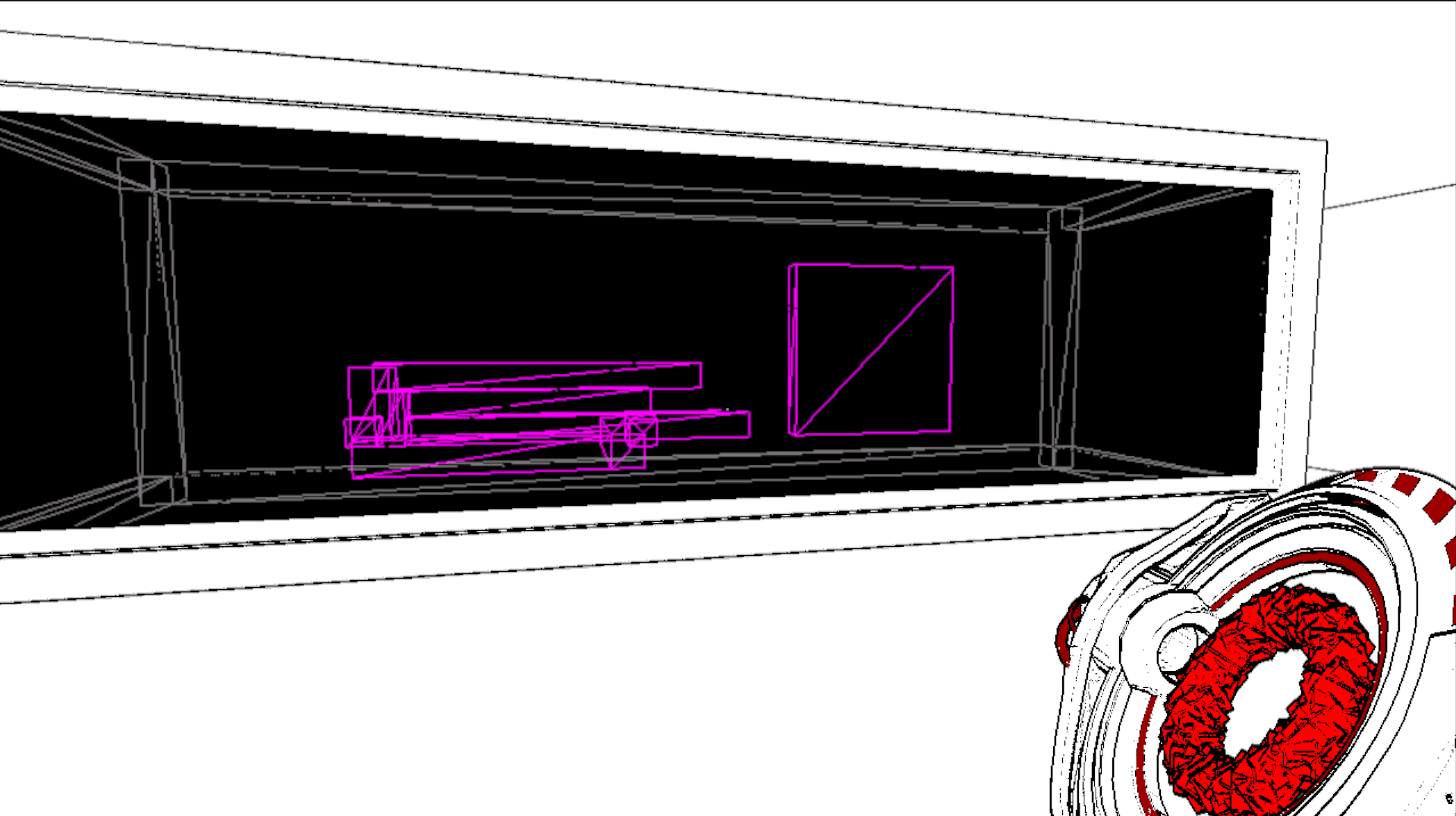
One of my favorite parts of the game is the secret rooms you can find across the map which share details about how the game was made. As a game developer myself, and someone who simply enjoys technical dives into how my favorite things were made, I greatly appreciate their inclusion. Little bits of technical details described to you visibly, pieces of the game’s history, it’s all really interesting to me.
Antichamber is unlike the games that inspired it, and it is unlike the games it inspired. It is something wholly its own, wholly unique, and absolutely wonderful to experience for the first time. It’s a lot like Portal: it sets its own rules which are always present but taught to you over time, and by doing so it does something that was never done before and may never be done again. And like Portal, while I suspect Antichamber will never see a direct sequel, it’s inspired a lot of other puzzle games to do their own strange and mind-bending things.
If you have the means to go play Antichamber yourself, I highly recommend it. It’s not a long game, and if you keep your eyes and mind open it’s not an overly difficult game, but it’s a very memorable one that I consider well worth playing. If you’ve already played Antichamber and you want to play other games that are about traversing impossible spaces, I recommend looking into AAAAXY, a free 2D puzzle-platformer which is so inspired by Antichamber that it steals a few puzzles and set pieces directly, and Manifold Garden, a fantastically unique puzzle game in its own right about both impossible and infinitely recursive spaces which, once you know what part of Antichamber it’s inspired by, practically wears that inspiration on its sleeve. Both of them are about the same length as Antichamber. Some games that I would consider to be spiritually related to Antichamber through their place in the “weird perspective puzzle” space but ultimately far less similar due to the lack of weird geometry are Viewfinder (just ignore the terrible ending, trust me) and Superliminal, and I consider those both worth playing as well. As always, I suggest watching some gameplay trailers before deciding to buy anything, unless you’re buying on a platform which is very generous with refunds.
If you do decide to play Antichamber, there are multiple guides available in the Steam discussions forums with varying levels of spoiler-ness. I used a couple of hints from here myself early on in my playthrough when I was a little directionless, but I do recommend that if you’re able you play the game entirely blind. But I will give you one specific non-puzzle pointer which was not obvious to me and that will help you find your own way from there. The map in the game’s starting chamber visually marks three things that are important for navigation: the chamber you began in, the chamber you returned from, and the path you took. This will help you orient yourself in Antichamber’s maze-like world and plan out your next path. There are other important elements to the map, but you can probably work them out yourself. If you can’t, you know where to go in order to learn them.